THE FLAWED SYSTEM (IN MY OPINION) - SUBCLASSES
What are subclasses?
I want to start by saying I think the original intent of subclasses was a good philosophy. They were meant to prevent what I'll call “samey” characters of the same class, so that every single fighter, rogue, wizard, etc. was the exact same character, which was an issue. The system helped to reduce the need for bloated class lists and flood the overall archetype/class list to be oversaturated. Also, helping to lock major identity choices to meaningful levels inside of the class which improves onboarding (in theory) by allowing the “Pick Fighter → Pick flavor → Play” model. Now…all of that is very good things and the intent is justified, however…over time I think a lot of this has become bloated and contributes now to the very problem it set out to “destroy”. How many times have we seen a new source book, whether it was an official source book release, or third-party modules on Kickstarter and Backerkit boast about adding 20, 30, recently I saw one boasting 60+ subclasses in one release! Now, on the surface, that sounds great, but in most TTRPG systems you still select one major class and one minor/subclass, so dozens and dozens of subclasses really just means for veterans there are more ways to play, but for DMs and new players there are much more things to learn in terms of what class does what and how this interacts with not only the main legacy class, but other legacy and new subclasses depending on the campaign/TTRPG system you’re playing at the moment.
Why do I think they're sub optimal?
In practice, subclasses predefine your fantasy VERY early, most often by around level 3. This can make your experience front-loaded power, utility or abilities which for me may be super fun and engaging early on but discouraging later when there's a ton of dead levels. If your build is already realized, why would you continue to be excited for the next level up? And even more so hindered by this is player fantasy and expression. The wind comes right out of the proverbial sails when you select that subclass and the actions and realize that you've reached the end of what you wanted your character to be essentially. Create hidden rails instead of removing rails. There seems to always be 2 polar opposite truths in RPGs, whether it's Tabletop or Video Games - either the game rewards experienced players with an in depth and relatively complex leveling/customization system IE Pathfinder, or a paired down and relatively rudimentary style of leveling similar to DnD 5E. Full disclosure, I’m not picking on these games, I LOVE both of them, but they both turn away one set of players or another, and they both rely on subclasses which in my opinion add arbitrary systems that lead you down the same path - stale and repetitive leveling and character building. Let's break it down a step further:
D&D 5E
Subclasses often grant defining mechanics
Multiclassing is swingy and balance-hostile
Feats are optional and under-supported
Casters already dominate the top end
So instead of “I grow into this concept” you get “If I don’t choose right now, my character concept breaks” which can definitely be both a downer for veteran players AND new players alike as they level a new PC.
Pathfinder 2E
Class feats
Archetypes
Dedications
Clear math guardrails
But even with PF2E (which in my opinion improves on some parts of the DnD formula) archetypes still feel like secondary classes, you still “commit” early to your PCs kit, and to add onto that there’s a MAJOR cognitive tax for player experimentation and skill expression.
All this being said, I DO NOT think the fix is to mid or back-load functions into the character progression track, so stick with me and I’ll explain…
What could/should replace them, if anything?
Why not lean into broader base archetypes, followed by horizontal specialization with vertical caps to protect class fantasy and identity. So, what in the hell is “Vertical and Horizontal Power”? The key principle:
Horizontal expansion = new options
Vertical scaling = raw power
So mainly, let players explore mixing of some powers from the pool of class powers but also the general cantrips and abilities available to all classes/classes belonging to a certain branch like martial/caster/etc. Think of it this way, your character can level outward, not just up the same “tree” but keep track of what you want this character to focus on, if you're scattered in all directions, i.e. all horizontal, you won't go too high on the tree and may be limiting yourself down the road in terms of raw power output. Also, to help keep classes distinct, which is extremely important in my opinion, there will always be abilities/powers/etc. locked to a certain class, i.e. their specialty. But this should never stop you from picking a fighter style character but wanting to be able to heal, cast fireballs, or be stealthy, why should it! Think of it this way:
******
You go to a sandwich shop, order a sandwich. You usually order something from their menu that comes with a certain style or flavor profile, let’s call those “classes” of sandwich. But, imagine that's ALL you could order. So, you choose the Italian, and lucky you, there's 2 “subclasses” … hot or cold! But as you see them making it, you think “Boy - this would be even better with some banana peppers!” You ask the person making your sandwich to add them. “Oops! You can't have those, only the turkey sandwich can add banana peppers.” Welp, I guess for your next dinner quest you'll have to start all over and order that one!
******
Forgive the silly analogy, but it illustrates my point. Players should have full agency to make any player character they want, and in return need to understand they can’t have a character maxed out at everything. There should be a reasonable limitation to your character. But the limitation should NEVER be the expectation. In my opinion, martial classes are a perfect building block for this design.
Instead of a Rogue, Paladin, Barbarian, or Fighter, why not have a “Man at Arms” class. This character is a broad template for a character meant to focus on (but not locked into) melee/martial fighting. That one class can decide to maybe put a point or two into holy magic, faith magic, religion or whatever the game lore/world has set as that theme, doing so can make them into some form of Paladin/Templar. Or they spec into two handed weapons and be like Barbarian/Berserker/Knight. Maybe you shift and go heavy armor/shield and they're like a tank in the form of a “Guardian” class or something. That's Multiple “subclasses” with zero paperwork, proprietary systems, or math. It's just common-sense character expression and fantasy.
Now, again I think the “one player fits all” character is bad design too, but like I mentioned above, with some common sense limitations on what classes can grab as spells or abilities its easy enough to make it balanced. Like a Man at Arms may have access to some capstone/key abilities that a sorcerer style character couldn't grab if they were leaning into melee/martial abilities, BUT - that should never keep a sorcerer from wanting to try using a sword, or being a magic assisted archer, or whatever they want. Maybe they'll never be a master archer like a ranger/sharpshooter focused class template could, but if they could be 60-70% of the archer that a dedicated ranged archer could be, that still lends itself to some fun storytelling concepts, AND some awesome roleplaying and class fantasy. This system also allows the DM to learn abilities and spells as they do now, without the very nuanced interactions by book specified sub classes.
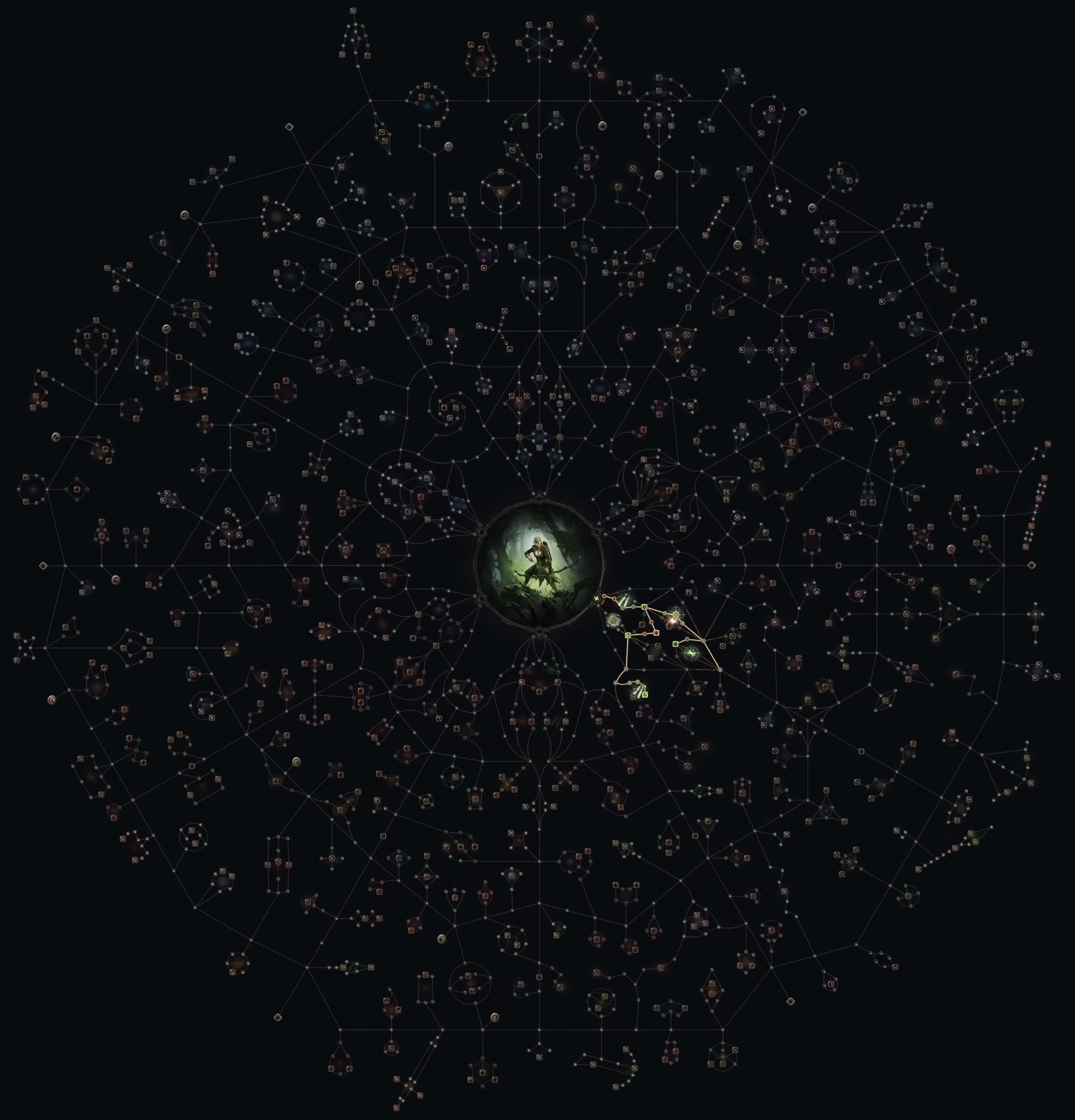
Now, this is just my take, and I’m in NO means a TTRPG designer, or designer in any sense of the word, this is just my take as a player of tabletop and video games alike. And looking at games like Path of Exile, or even Elden Ring, it kind of seems like other folks have similar ideas. Take PoE for instance, every class starts on a GIANT skill map, but your starting class dictates where on the tree you start. This doesn't hamper you really from going some crazy way on the skill tree and being a strength-based witch. Should you? Probably not, and that model is relatively punishing to new players, but there is definitely a balance we can strike to allow player agency AND letting even new players feel as though they can be the character they want while also contributing to the overall campaign narrative and combat on the way to get to the conclusion. I think Elden Ring does a good job of iterating on the PoE leveling system while making it a bit more streamlined but still allowing for a wide variety of builds with its unrestricted weapon/armor and stat points while letting you use whatever you want as long as you meet the stat threshold. “Classes” in Elden Ring , and really all From Soft titles are mainly based on your armor, skills and weapon, they’re really whatever you want them to be which I LOVE and think TTRPGs could implement without much trouble and it would open TONS of doors!
This one was a LONG winded one, so I appreciate you hanging out. Lots more content finally coming to the Apprentice Corner now that our main content flow is established, see you all soon in The Maze!