
THE “VALUE EQUATION” - APPRENTICE GEAR & EDC
Hey everyone, Stephen here!
If you read my previous update, you already know that my gaming time has become pretty limited these days. While our main blog and podcast has expanded into topics we never used to cover (which is great!), that left the Apprentice Corner in a strange spot. The content that this blog was made to cover is now being talked about for the most part in other facets of this project, so without a lot of gaming on my end, this corner was starting to run dry, so I decided to broaden the scope and talk about some of my other hobbies and interests outside of gaming.
One of the biggest of those interests is gear.
I'm talking about everyday carry (EDC) stuff, pocket knives, watches, backpacks, tools, and all the little pieces of equipment that help us navigate our daily lives. Whether you're a tradesperson, an office worker, a tech enthusiast, or just someone trying to stay organized, there's a good chance you interact with gear every single day.
And if you're trying to decide what gear is worth buying, I think there's one fundamental concept that deserves a closer look: value.
What Does "Value" Actually Mean?
Value is a funny word because most people immediately associate it with cost. For years, that's exactly how I thought about it too. Expensive meant poor value. Cheap meant good value. Simple, right? Then I heard someone explain it differently, and it completely changed the way I think about gear. They said:
“Something can be expensive and still be a good value. Something can be cheap and still be a bad value. Value has nothing to do with the cost of something.”
That idea stuck with me.
Value isn't simply what something costs. It's what something is worth to you. Cost is certainly part of the equation, but it isn't the entire equation. Over time I've developed my own framework for evaluating gear, and it's surprisingly simple. When I look at a tool, backpack, watch, or really anything that isn't an absolute necessity, I evaluate it based on three categories:
Cost
Function
Aesthetics
Every item gets graded in those three areas.
How much does it cost? How well does it perform its intended job? And do I actually enjoy the way it looks? (Least important of the 3, but still something to think about). My goal is usually to find products that perform well in at least two of those three categories. If one category is weaker, I can often overlook it. However, there is one category that I consider non-negotiable:
Function. A tool needs to do its job.
If you're buying something intended to save time, solve problems, increase efficiency, or potentially keep you safe, then it needs to perform reliably. It doesn't matter how beautiful it looks or how expensive it was or wasnt if it falls apart when you actually need it.
On the other hand, a tool that's incredibly functional can get away with a lot. It might be expensive. It might not be particularly attractive. But if it becomes an essential part of your daily life, those shortcomings become much easier to forgive.
Retained/Maintained Value
I think most people understand those three categories instinctively. Where I see people struggle is when it comes to measuring value over time.
For me, that's where the math gets interesting.
Take my Leatherman Signal multitool as an example.
It was a gift from a family member roughly 10 years ago, and for most of that time it was my only multitool. I've used it constantly. It has never failed me, and I still carry and use it today.
Looking online, a Leatherman Signal currently sells for around $150.
If we assume that's what it cost and divide that price over ten years of ownership, that tool has effectively cost about $15 per year. That's pretty solid value.
Now let's compare that to something on the opposite end of the spectrum. Last year I bought a 7-in-1 Ozark Trail multitool from Walmart for about $7. I've owned it for a year, and it still works. Using the same math, that means it has cost me $7 per year so far. On paper, the Ozark Trail is actually providing better financial value than the Leatherman.
Of course, things aren't quite that simple. The Leatherman has a decade-long track record. Its materials are better. Its fit and finish are better. Its functionality is better. I would argue its aesthetics are better too.
But the Walmart multitool introduces an interesting question. What if it lasts another year? Now it's cost me $3.50 per year. What if it lasts five years? Suddenly that $7 purchase starts looking like a remarkably good investment.
Will it ever be as good as the Leatherman? Probably not. But it doesn't necessarily have to be. You could buy ~10 of those Ozark Trail multitools for the cost of 1 Leatherman Signal. If that $7 tool gives you several years of useful service, did it provide enough value? I think many people would say yes.
Buy the Tool That Matches Your Needs - don’t be irrational or delusional about what you actually need.
The important question isn't whether a cheap tool is as good as a premium tool. The question is whether you actually need the premium tool. I work in IT. I use a multitool regularly, but rarely in situations where my life depends on it. Could I get by with a cheaper option? That’s the question that had me buy additional tools, to test them, and to give them to my guys at work in case they don’t have one on them and it’d be beneficial to have another set of hands, they’ve been fine.
That said, I love my Leatherman, and if I were forced to keep only one multitool, that's the one I'd choose. But my needs aren't everyone else's needs. If you rely on your tools every single day for your profession, or if failure could have significant consequences, then maybe spending a little more for reliability or track record makes perfect sense.
Maybe moving from a $7 tool to something that effectively costs $15 or $20 per year is a worthwhile investment. The answer will be different for everyone. Start Cheap, Learn, Then Upgrade One trend I see constantly in the gear world is people buying premium equipment long before they have the knowledge or experience to really benefit from it.
Personally, I think there's wisdom in starting small.
Buy the affordable knife, tool, insert anything here.
Use it, learn how to maintain it, learn how to sharpen it, clean it, disassemble it, and understand its limitations. Build the skillset first.
Then, when you've developed the experience to appreciate what makes premium gear special, upgrade. You'll get far more value from that higher-end purchase because you'll actually understand what you're paying for. More importantly, you'll have learned an important lesson:
The most valuable part of any tool isn't the tool itself. It's the person using it.
At the end of the day, most people fall into one of two camps.
Some assume the most expensive option must be the best.
Others buy the cheapest thing available because it's all they need right now.
I think the truth usually lives somewhere in the middle.
When evaluating gear, don't just think about cost. Think about function. Think about longevity. Think about how often you'll use it. And, for the fun stuff, don't be afraid to admit that aesthetics matter too.
Good gear exists to make your life easier.
Great gear makes your life easier for years.
The trick is finding the point where cost, function, and aesthetics intersect for you.
That IS the value equation.
Until next time, I'll see you back here in the Apprentice Corner to talk more about gear, tech, and whatever other rabbit holes I'm currently exploring.
Later on…
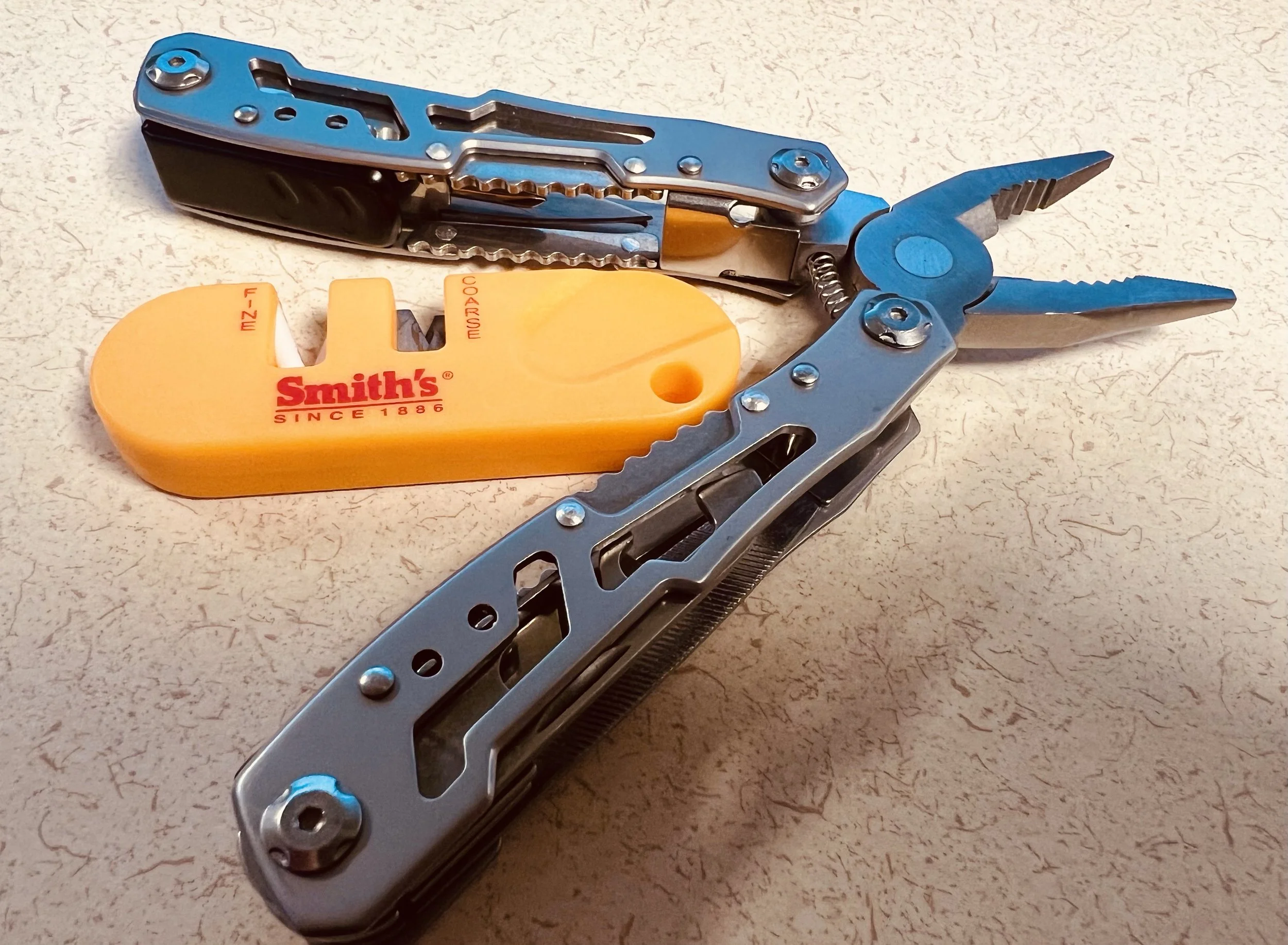
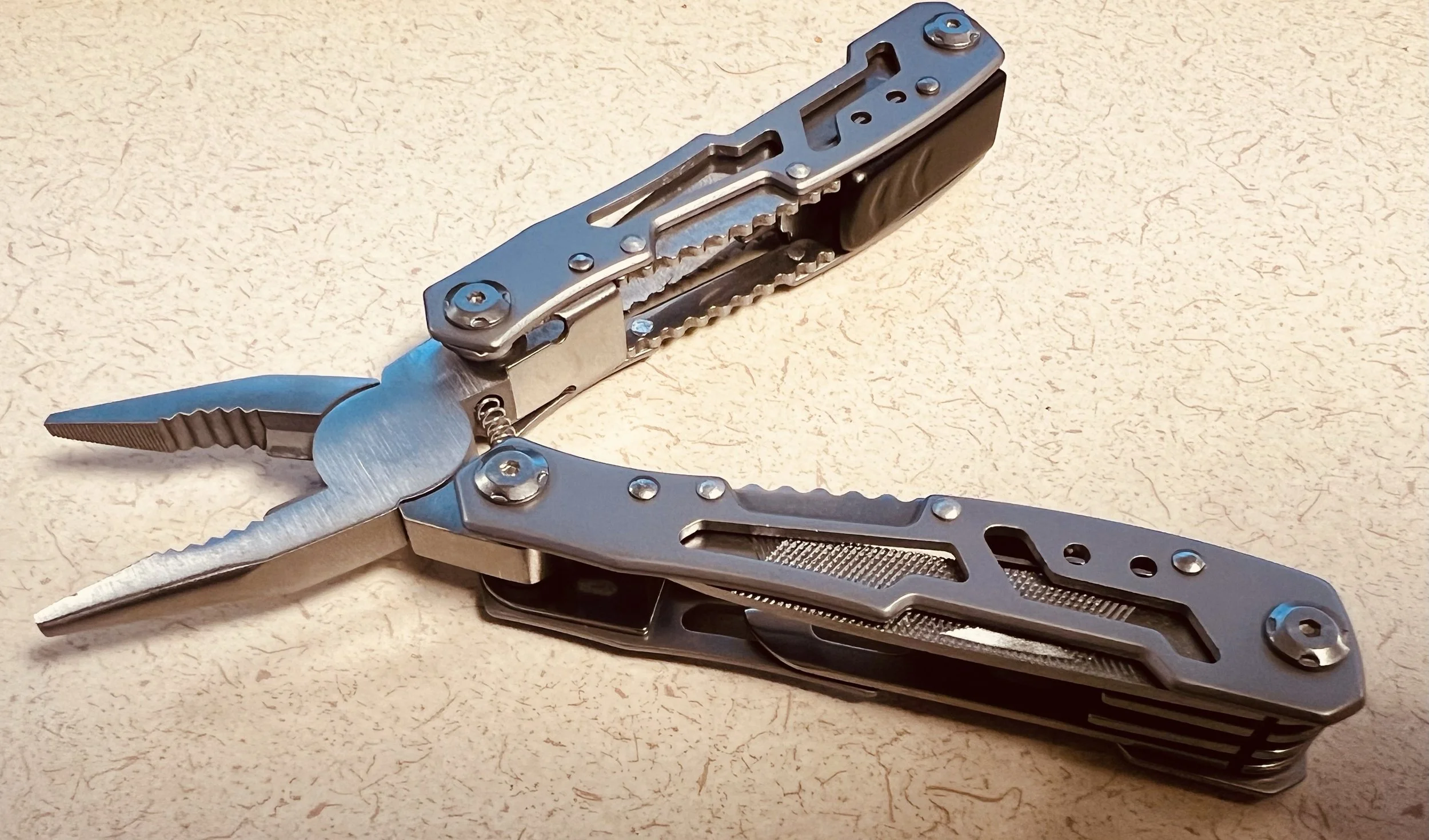
*Pictured here is NOT the Walmart tool or the Leatherman obviously - it is another “value priced” (the slogan on the box, not my phrasing obv.) multitool I grabbed recently in a TJ Maxx. I’ll probably talk about it sometime.